
English
Discover Roche Claire, the ideal spring water for babies: pure, low in minerals, alkaline, and free from dry residue and nitrates.
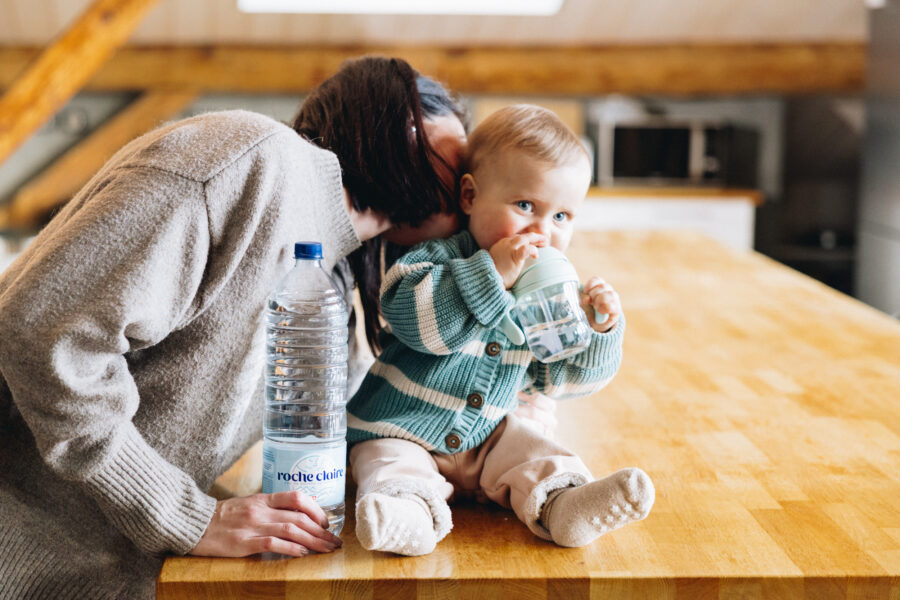
During breastfeeding, hydration becomes a key concern. Many mums ask themselves simple, practical questions: what sort of water should I drink whilst breastfeeding? Do I need to change my habits? Which type of water is best for everyday use? And what about the breastfed baby: do they need water as well as breast milk?
These are very common questions. Breastfeeding places greater demands on the body, and days can be punctuated by feeds, tiredness and, at times, a lack of guidance. The good news is that there are simple, reassuring guidelines to help you stay well hydrated without overcomplicating things.
In this article, we cover:
Breastfeeding leads to a natural increase in fluid requirements. Producing milk requires energy, but also water: breast milk contains a high proportion of water, which explains why some mothers may feel particularly thirsty, especially during feeds.
Staying well-hydrated helps to maintain general comfort and ensure the body functions properly. In particular, it helps to:
It is important to make one reassuring point clear: there is no need to force yourself. Drinking huge amounts of fluid does not automatically ‘produce’ more milk. The body is perfectly capable of regulating its own needs. The best strategy is therefore simple: drink regularly, and above all, listen to your thirst.
There are a few signs that can help you gauge your needs:
In this case, drinking more water throughout the day (rather than large amounts all at once) can really make you feel more comfortable.
During breastfeeding, a mother’s water requirements naturally increase. The body draws on more resources to ensure milk production, which explains why some women feel more thirsty, especially in the first few weeks.
There is no one-size-fits-all amount, as requirements vary depending on weight, activity levels, the outside temperature and feeding patterns. The key is to drink water regularly throughout the day, without waiting until you feel very thirsty.
Inadequate fluid intake can increase the risk of dehydration, with symptoms such as tiredness, headaches or dark-coloured urine. Drinking enough fluids helps to support the mother’s health and ensures a smooth milk supply.
When considering which water to drink whilst breastfeeding, the aim is to choose plain water that is pleasant to drink, suitable for regular consumption, and does not put undue strain on the body.
Many mums opt for bottled water for its convenience: you can keep it by the sofa, by the bed or in the nappy bag, and it’s easy to drink whilst breastfeeding. It’s also a popular choice because of its consistency: the taste and composition remain stable, making it easier to stay regularly hydrated.
Ideally, you should choose water that is:
This type of water is generally well tolerated and easy to drink, which is essential: whilst breastfeeding, the aim is not to ‘find the perfect water’, but to have water that you actually drink, several times a day.
You can find spring water and natural mineral water. There are differences between them, but for a breastfeeding mum, the main consideration remains the overall composition, particularly the mineral content.
Some mineral waters are rich in minerals. They are not ‘bad’, but they are not necessarily ideal for very regular consumption if they are highly mineralised. Conversely, lighter waters , whether spring water or mineral water, may be more comfortable for everyday consumption.
In practice, what matters most is:
Without getting into complicated analyses, there are a few useful details to look out for on the label:
These guidelines are more than enough. The aim is to keep things simple, accessible and compatible with the everyday life of a new mum.
One question comes up very often: should a breastfed baby drink water?
In most cases, the answer is no.
Before starting solid foods, a baby gets all the fluids they need from breast milk, which is naturally tailored to their needs. Breast milk changes during a feed:
This is also why it is often recommended to let the baby feed at their own pace: they take what they need.
A breastfed baby generally does not need to be given water, as breast milk is made up of around 87 per cent water. It therefore meets the infant’s fluid requirements on its own.
Before introducing solid foods, offering water is unnecessary and may even reduce milk intake. Babies know how to adjust their feeds according to their needs, particularly in hot weather or when they are very hungry.
If in doubt (fever, vomiting, signs of dehydration), it is important to seek medical advice. However, in most situations, breastfeeding more frequently is sufficient to ensure proper hydration.
When it’s hot, it’s normal to worry about hydration. Generally speaking, offering the breast more often is enough. Your baby may ask to feed more frequently, sometimes for shorter feeds: this is a natural physiological response.
If you have any concerns (fever, signs of dehydration, a very drowsy baby), it’s best to seek advice from a healthcare professional. But on a day-to-day basis, breast milk meets your baby’s hydration needs.
The most effective tips are often the simplest. The aim is to make drinking water part of your daily routine, without having to think about it.
This approach is easy to follow and suits most mums.
Water remains the simplest and most reliable drink. Herbal teas can also help to add variety, but it’s best to stick to simple blends (and avoid overdoing it). Very sugary drinks aren’t ideal for everyday consumption, as they can make you thirsty and don’t promote consistent hydration.
The idea isn’t to ‘get it perfectly right’, but to make staying hydrated easy, enjoyable and consistent.
Many mums wonder how much they should drink whilst breastfeeding. In practice, there’s no need to count the exact number of litres of water per day. The best guide is still how thirsty you feel.
Some women naturally drink more during this time, whilst others do not. The important thing is to stay hydrated regularly, in small amounts, throughout the day. Keeping a bottle of water close by makes it easier to drink, especially during feeds or at night. In hot weather, it’s normal to drink more to make up for fluid loss and avoid dehydration. Listening to your body remains the most reliable guide.
It is important to drink enough, but forcing yourself to drink huge amounts does not automatically increase milk production. Breastfeeding depends mainly on the frequency of feeds, the baby’s demand, and the mother’s rest and well-being.
No. Breast milk is produced by the body and naturally adapts to the baby’s needs. The important thing is for the mother to eat a balanced diet and stay well hydrated.
A simple guide: clear to pale yellow urine, a moderate feeling of thirst, and less of a dry mouth. If you feel very tired or have a headache, drinking a little more may help.
In short, “water and breastfeeding” shouldn’t become a source of stress. By drinking plain water, staying regularly hydrated and adopting a few good habits, you’ll give yourself the best possible chance of enjoying a more relaxed breastfeeding experience – for both you and your baby.
Discover Roche Claire, the ideal spring water for babies: pure, low in minerals, alkaline, and free from dry residue and nitrates.
Understanding dry residue and choosing a low-mineral-content water that is suitable for babies’ needs, it’s that simple.
Find out why Roche Claire water, which is pure and has a low mineral content, is ideal for babies from birth.