
English
Discover Roche Claire, the ideal spring water for babies: pure, low in minerals, alkaline, and free from dry residue and nitrates.
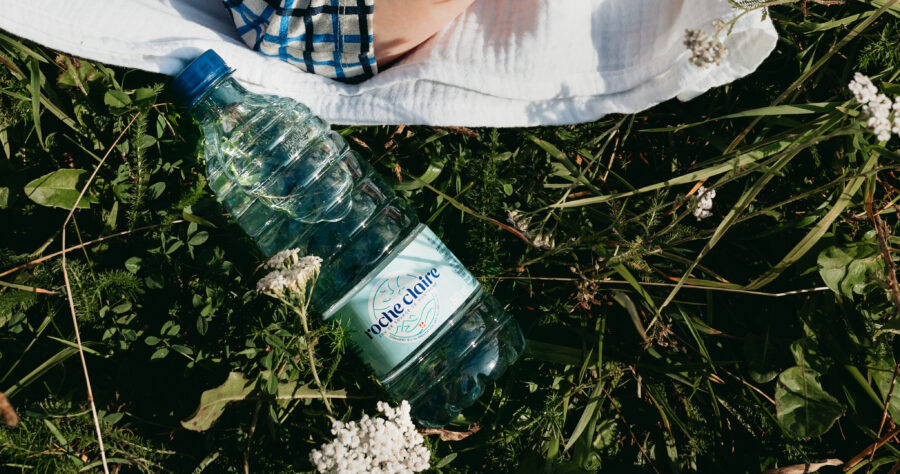
Preparing a bottle seems, on the face of it, a simple task. However, when you become a parent, many questions quickly arise: what sort of water should you use to prepare a bottle for your baby? Can you use tap water for an infant? Should you opt for natural mineral water, spring water or low-mineralised water? How long can an opened bottle of water be used for feeding infants?
Faced with the vast amount of information available online, sometimes contradictory advice from friends and family, and common misconceptions, it’s easy to make certain mistakes regarding water for baby bottles, often without even realising it. The good news is that these mistakes are common, avoidable and generally harmless, provided they are identified and corrected quickly.
In this article, we review the five most common mistakes regarding water for babies, and share simple, practical and reassuring tips to help you prepare bottles with confidence every day.
When preparing a bottle, the choice of water may seem less important than the choice of infant formula. However, the water used in the bottle is an integral part of an infant’s diet. It is consumed several times a day, sometimes for several months, or even for over a year.
In infants, the digestive system and kidneys are still immature. They do not filter out minerals in the same way as an adult’s. Water that is too rich in minerals can therefore place an unnecessary strain on a baby’s body, especially when this water is used daily to prepare bottles.
Conversely, low-mineralised water suitable for infants’ diets better meets babies’ specific needs, particularly when preparing infant formula. Understanding the differences between tap water, natural mineral water and spring water helps to avoid certain common mistakes, without unnecessarily complicating life for new parents.
In practice, parents often find themselves torn between tap water, spring water and natural mineral water. The important thing is to understand that ‘drinkable’ does not necessarily mean ‘ideal for an infant’, especially when this water is used several times a day to prepare bottles.
Tap water may be suitable in some cases, but its quality depends on several factors: the local authority, the treatment processes, and, above all, the condition of the property’s pipework. In older properties, the presence of lead in certain installations (old pipework) can be a cause for concern. That is why, if in doubt, it is best to seek advice from a healthcare professional or to opt for bottled water suitable for feeding infants.
When it comes to bottled water, there is a difference between spring water and natural mineral water. Both originate from underground sources, but natural mineral water is characterised by a stable mineral composition. However, ‘stable’ does not automatically mean ‘suitable for babies’: some mineral waters may be too high in minerals. When preparing a bottle, you should therefore opt for low-mineralised water labelled ‘suitable for infant feeding’.
This is the most common mistake made by new parents: assuming that any drinking water is automatically suitable for an infant.
Drinking water for adults meets general health standards, but that does not necessarily mean it is suitable for feeding infants. Some types of water may be too high in minerals, particularly sodium, calcium or magnesium.
The most important factor to check is the dry residue, expressed in mg/L. This corresponds to the total quantity of minerals present in the water after evaporation.
For an infant, it is recommended to choose water with a low mineral content, in order to avoid an excessive intake of minerals already present in infant formula. Water with too high a mineral content may, in some babies:
This does not mean that mineral water is dangerous, but simply that it is not ideal for daily use by infants.
👉 When preparing a bottle, always use water labelled ‘suitable for infant feeding’.
This label indicates that the water meets specific criteria tailored to babies’ needs and to the preparation of bottles.
Once a bottle of water has been opened, its quality may change, even if the water appears clear, odourless and tasteless.
Many parents believe that a bottle of water can be used for several days without any risk. However, when it comes to water for infants, caution is essential.
Once opened, the water is exposed to:
In infants, the immune system is still developing. Using water that has been open for too long can therefore increase the risk of contamination, especially if the bottle is kept at room temperature or is not sealed properly.
For water used to prepare a bottle:
These simple steps help to maintain water quality without adding unnecessary hassle to daily life.
With the rise in popularity of filter jugs, many parents believe that filtered water is automatically suitable for feeding infants.
Filtration can improve the taste of tap water, but it does not guarantee:
Furthermore, a poorly maintained filter jug can encourage the growth of bacteria. Filtered water can therefore give a false sense of security, without offering the same guarantees as water specifically designed for babies.
👉 Filtered water is therefore not the same as water for infants.
When preparing bottles, it is best to choose bottled water suitable for infant feeding, as its composition is monitored and remains stable over time.
The temperature of the water and how it is stored play a vital role in preparing a bottle, but are often underestimated.
Using water that is too hot can:
It is therefore essential to follow the instructions on the infant formula carton, particularly those relating to the temperature of the water used to prepare the bottle.
A bottle of water exposed to heat or sunlight, or stored in an unsuitable environment, may deteriorate in quality. Even if the water remains safe to drink, it may no longer be ideal for an infant.
In their eagerness to do the right thing, some parents end up with a host of conflicting rules about water for their baby, which can lead to stress, exhaustion and confusion.
Between forums, social media, advice from friends and family, and information found online, it becomes difficult to know which water to use when preparing a bottle. However, preparing a bottle is based on a few simple rules, not an endless list of restrictions.
Back to basics:
Simplicity is often a new parent’s best friend.
Here are a few practical tips for preparing bottles with peace of mind:
These simple habits can significantly reduce the risk of error, without adding any unnecessary hassle.
Choosing the right water for baby bottles is essential, but it shouldn’t become a source of stress. With low-mineralised water suitable for infant feeding, clear guidelines and simple steps, it’s entirely possible to prepare baby bottles with confidence, day after day.
Discover Roche Claire, the ideal spring water for babies: pure, low in minerals, alkaline, and free from dry residue and nitrates.
Understanding dry residue and choosing a low-mineral-content water that is suitable for babies’ needs, it’s that simple.
Find out why Roche Claire water, which is pure and has a low mineral content, is ideal for babies from birth.